Winter Quarter, Full Classrooms, and Finding the Rhythm Again

The Winter 2026 quarter is in the books.

For the first time since COVID, I was back teaching full-time in person. This quarter, I taught Intro to Programming and Problem Solving (CS50P), PHP with SQL 1, and Web Interface Design. Walking back into full classrooms again felt good. There is something about hearing students talk before class starts, seeing whiteboards filled, watching students help each other, and feeling the energy in the room that you simply cannot recreate online.

I’ll be honest, though. Teaching full-time in person really drains you. There’s something about it that feels like being part of an interactive educational show. You’re on your feet, constantly moving, reading the room, trying to keep students interested, answering questions, shifting gears, and making sure no one gets left behind. That gets harder with age, and by the end of some days, I definitely feel it.

Attendance was close to 100% throughout the quarter. Participation counts for 30% of the grade, which certainly helps, but students still had to choose to show up, be engaged, ask questions, contribute, and work with each other. They did, and that meant a lot. College works better when people are actually in the room together.

There were some struggles, too. One of the software development tools we needed was not accessible in our classrooms, so students had to spend the first 15 to 20 minutes of class installing it on their own devices before we could even begin. That became an unexpected routine for a while. It was frustrating, and it took away valuable class time. That is probably a story for another day.

Students today are different from those they were six years ago. Their confidence has changed. Their communication styles have evolved. Their attention spans are shorter. The world has shaped them differently. However, one thing remains the same: students still seek connection, support, structure, encouragement, and someone who believes in them.

This quarter reminded me why I still love teaching. There is something special about a full classroom, pizza days, rubber ducks on tables, group work, inside jokes, and the quiet student who finally raises their hand for the first time.

I am grateful for all of it.

And thank you to Juniper, Katie, Theo, Tiffany, Chef Earl, Niira, Fellene, Robert, Tom, Zach, Karl, Adam, Lucy, David, Rongxin, and, of course, Gayle for helping make the quarter a success.

Bringing it Back to the Classroom

Today, my classes, which usually meet on Zoom, gathered in person. And wow, what a difference. You can read the room in ways you simply can’t through a screen. You see confusion, curiosity, lightbulbs flicking on, and you can adjust right there in real time. When students are right in front of you, you can sense when something isn’t clicking and pivot immediately. That kind of feedback loop makes teaching feel alive again.

After today, I’m convinced. Starting this winter, I’ll be bringing my courses back to being fully in person. I’ll still have a few online sections, but not many. My goal is to get them all back to the classroom eventually. There’s an energy and rhythm that come from being together that technology can’t replicate.

Because it was our first in-person class in a while, I handed out rubber ducks to each student. They’re part of how I teach coding, a symbol of debugging, reflection, and patience. Watching students line them up on their laptops made me grin. It reminded me that learning works best when it’s hands-on, a little playful, and shared with others.

To top it off, my morning class enjoyed cookies, pumpkin loaf, and scones from the Clark College bakery. For a moment, the room felt like a true community again, warm, curious, and connected.

There’s also an honesty to being in a physical classroom. You can’t hide behind AI or a screen. You have to show up, think on your feet, and engage. That’s where the real learning happens. And yes, I’m still an AI proponent. My students use it, and I teach them how to use it responsibly. However, AI doesn’t replace the value of showing up, questioning ideas, or learning face-to-face.

Technology has its place, but the best learning still happens when we share the same energy, the same attention, and the same spark that only real presence can create.

After five hours of what can only be described as interactive educational theater, I’m wiped. But in the best possible way.

Fellow educators, have you experienced this difference as well?

250 Viewers in 43 Countries

I’m extremely happy to report that my “Up and Running with IBM Connections” video course has now been viewed by 250 Lynda.com subscribers in 43 countries. All of this in one weeks time. Today I received my first “user feedback” and it was extremely positive and encouraging.

You can view the first 5 videos in the series for free. There are 38 videos in total.

  1. Welcome
  2. Accessing IBM Connections for the first time
  3. Configuring notifications and account settings
  4. Updating your profile
  5. Inviting a guest

If you are not yet a Lynda.com subscriber you can sign up for a free 7 day trial.

I’m in the process of developing several more courses for Lynda however, I’m not yet able to disclose what they will be. Many thanks to my friend Jess Stratton, Lynda.com staff author and my producer Jonathan Sears for all of their help, patience and guidance.

Lynda.com Video: Women in STEM

This short film profiles inspiring examples of women who got their start, and found their calling, in STEM — Science, Technology, Engineering, Mathematics.

It features Sheeri K. Cabal, database admin at Mozilla and author of the popular OurSQL podcast; Jess Stratton, lynda.com author and the founder of Solace Learning; and Peggy Fisher, professor of computer science at Penn State and leader of several tech-focused after-school programs for disadvantaged youth.

Here Sheeri, Jess, and Peggy talk about the key factors to their success (confidence, community, and curiosity), and the ways they’re encouraging more students to enter STEM.

http://vimeo.com/107201940


The video includes my friend Jess Stratton who you may know from the IBM/Lotus world and who is now a Lynda.com staff author. The video also includes photos of Gab Davis, Kathy Brown, and many others of the “Nerd Girls”. It’s a “must watch” video.

Watch it now >

Seven Microsoft MTA’s Completed

Earlier this week I completed my seventh Microsoft Certified Technology Associate (MTA) exam. The test was the “HTML5 Application Development Fundamentals (Exam 98-375). This exam focussed on the following:

  • Managing the Application Life Cycle
  • Building the User Interface by Using HTML5: Text, Graphics, and Media
  • Building the User Interface by Using HTML5: Organization, Input, and Validation
  • Understanding CSS Essentials: Content Flow, Positioning, and Styling
  • Understanding CSS Essentials: Layouts
  • Managing Text Flow by Using CSS
  • Managing the Graphical Interface by Using CSS
  • Understanding JavaScript and Coding Essentials
  • Creating Animations, Working with Graphics, and Accessing Data
  • JavaScript Coding for the Touch Interface, Device and Operating System Resources, and More

Here is a list of the MTA’s that I have completed the last few months:

  1. Microsoft Technology Associate: HTML5 Application Development Fundamentals, July 17, 2014
  2. Microsoft Technology Associate: Networking Fundamentals, June 18, 2014
  3. Microsoft Technology Associate: Security Fundamentals, June 11, 2014
  4. Microsoft Technology Associate: Database Administration Fundamentals, June 09, 2014
  5. Microsoft Technology Associate: Web Development Fundamentals, June 09, 2014
  6. Microsoft Technology Associate: Windows Operating System Fundamentals, June 04, 2014
  7. Microsoft Technology Associate: Software Development Fundamentals, February 25, 2014

Next up is the .NET Fundamentals exam.

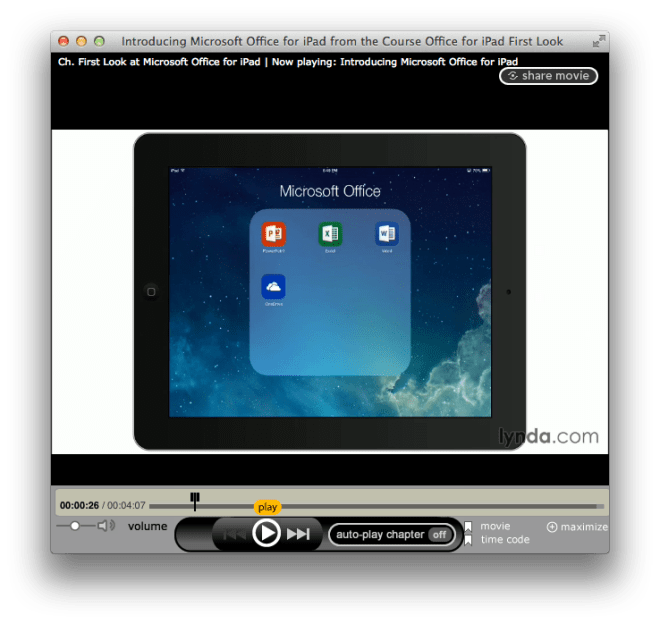
iPad for Office First Look

Jess Stratton, Lynda.com author and friend,
just released a series of free videos covering the recently release Office of iPad:

  • Introducing Microsoft Office for iPad
  • Introducing Microsoft Word for iPad
  • Introducing Microsoft Excel for iPad
  • Introducing Microsoft PowerPoint for iPad

Office for iPadWatch the videos >

Registration is Now Open for MongoDB University

Take free online courses from the creators of MongoDB. MongoDB University offers courses for both developers and DBAs.

  • Seven week courses give you flexibility to work through material when it suits your schedule.
  • Frequent assessments and check-ins by TAs and instructors help you verify your understanding.
  • A certificate of completion confirms your membership in our community of cutting-edge NoSQL technologists.

More than 100,000 people have enrolled in our courses to date.

Register now >

Ars Technica: What’s the difference between college-level and corporate programming?

This article strikes home as I am now completing my first year as a college instructor who teaches computer programming:

When they graduate and get their first job, a lot of students feel like they don’t really know how to program even though they may have been good programmers in college.

What are some of the differences between programming in an academic setting and programming in the ‘real world’?

In a traditional undergraduate computer science program you learn just programming. But the real world doesn’t want people who are just programmers. The real world wants real software engineers. I know many job descriptions don’t seem to express this distinction, which only confuses the matter.

More >