Understanding AI in an Evolving World

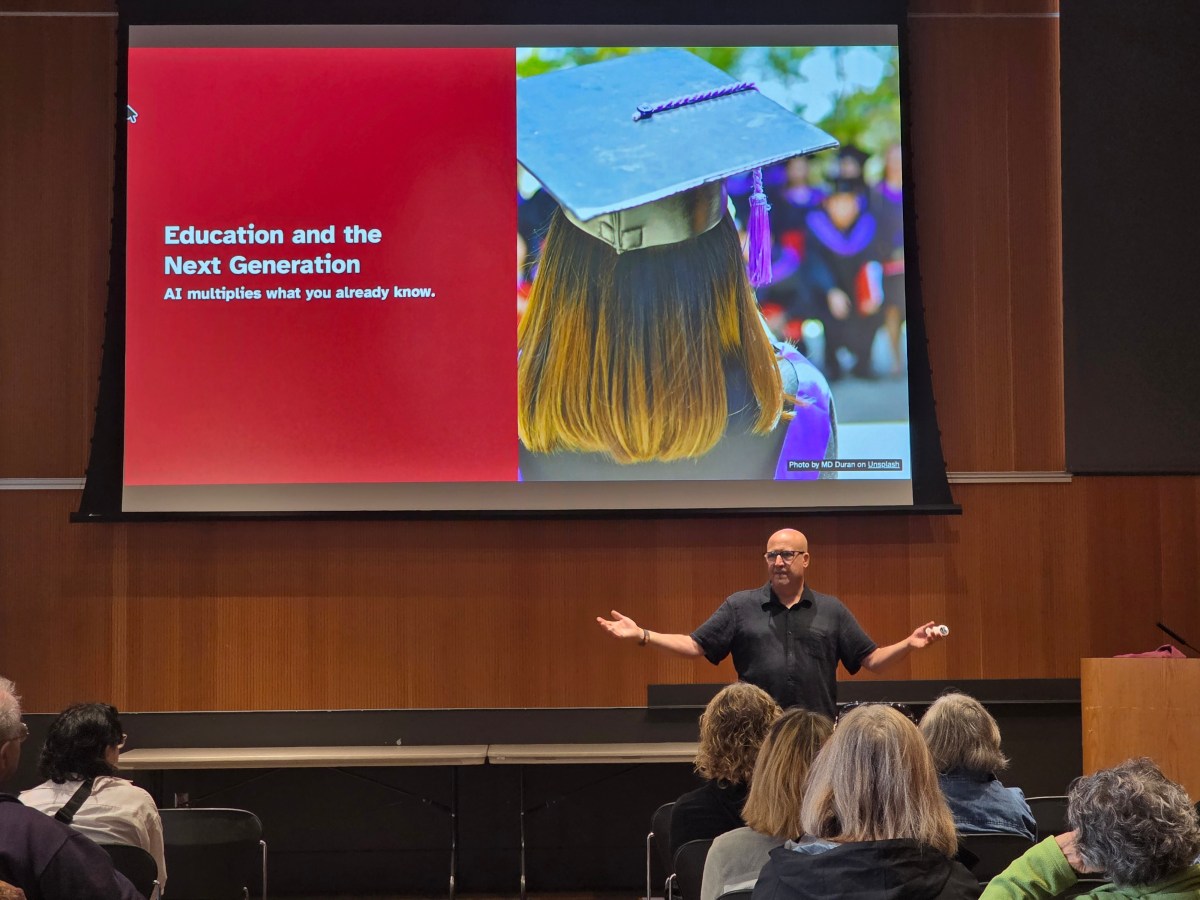
I’m honored to have been featured by Clark College in their article, Understanding AI in an Evolving World, a profile of my recent Penguin Talk: Everyday AI titled “Understanding its Role in Our Evolving World.”

In the piece, I reflect on how AI has quietly established itself in our daily lives, including my own morning routine. Yet, far more importantly, I raise the deeper question: modern AI systems are astonishing at pattern recognition and prediction, but what does it mean to know something today? I asked, “What does it mean to know something in 2025?”

I remain committed to helping students do more than just use AI. It’s not enough to hand over the facts. We must guide them toward understanding the story behind the facts, the reasoning behind tools, and the ethics behind technology. In my classes, I emphasize that AI is not neutral. It mirrors the choices and incentives of its creators; it may “know what’s right” but not why it’s right.

One concrete approach I’ve shared: an AI-driven version of the old rubber duck debugging trick. Students explain their thinking step by step, now supplemented by an AI “duck” that doesn’t give answers but provokes thought. It’s about building reasoning, not shortcutting it.

If you’re curious about how AI influences education, ethics, or simply how we live and work, I invite you to read the full article over at Clark College, reflect on the questions raised, and decide where you stand. The future won’t wait.

Here’s my slide deck >

Bringing it Back to the Classroom

Today, my classes, which usually meet on Zoom, gathered in person. And wow, what a difference. You can read the room in ways you simply can’t through a screen. You see confusion, curiosity, lightbulbs flicking on, and you can adjust right there in real time. When students are right in front of you, you can sense when something isn’t clicking and pivot immediately. That kind of feedback loop makes teaching feel alive again.

After today, I’m convinced. Starting this winter, I’ll be bringing my courses back to being fully in person. I’ll still have a few online sections, but not many. My goal is to get them all back to the classroom eventually. There’s an energy and rhythm that come from being together that technology can’t replicate.

Because it was our first in-person class in a while, I handed out rubber ducks to each student. They’re part of how I teach coding, a symbol of debugging, reflection, and patience. Watching students line them up on their laptops made me grin. It reminded me that learning works best when it’s hands-on, a little playful, and shared with others.

To top it off, my morning class enjoyed cookies, pumpkin loaf, and scones from the Clark College bakery. For a moment, the room felt like a true community again, warm, curious, and connected.

There’s also an honesty to being in a physical classroom. You can’t hide behind AI or a screen. You have to show up, think on your feet, and engage. That’s where the real learning happens. And yes, I’m still an AI proponent. My students use it, and I teach them how to use it responsibly. However, AI doesn’t replace the value of showing up, questioning ideas, or learning face-to-face.

Technology has its place, but the best learning still happens when we share the same energy, the same attention, and the same spark that only real presence can create.

After five hours of what can only be described as interactive educational theater, I’m wiped. But in the best possible way.

Fellow educators, have you experienced this difference as well?

The Definition of “workslop”

Workslop (noun) – The flood of low-quality, AI-generated work that looks polished on the surface but is hollow underneath. It clogs inboxes, reports, and project folders with half-baked writing, shallow analysis, and factual slush that others have to fix, rewrite, or ignore.

In short, workslop is the illusion of productivity without the substance of real work. It wastes time, erodes trust, and turns collaboration into a cleanup duty.

College is the Real World

Every so often, I catch myself thinking about why I design my classes the way I do.

College is the real world. My students aren’t waiting for life to begin after graduation; they’re living it right now. Working jobs. Raising kids and balancing a million things.

So when I build assignments, I don’t pretend we’re in some academic bubble. I try to make my classes reflect what it’s actually like out there: teamwork, deadlines, problem-solving, communication, and showing up even when it’s hard.

It’s a reminder to myself: I’m not “preparing” students for the real world.

I’m teaching in it.

Helpful web browser extensions for Clark College students and staff

Clark College Student Success Resources Extension

The resources in this extension can help you navigate to the most common places on the website you may need at Clark.

Clark College Events Extension

Discover what’s happening at Clark College with ease. The Clark College Events app brings you a real-time feed of important campus events, deadlines, and employee training opportunities — all in a clean, accessible format.

Clark College Web Development Extension

This extension provides Clark College Web Development students with valuable resources to support their coursework.

Still Learning. Still Teaching. Still Fired Up.

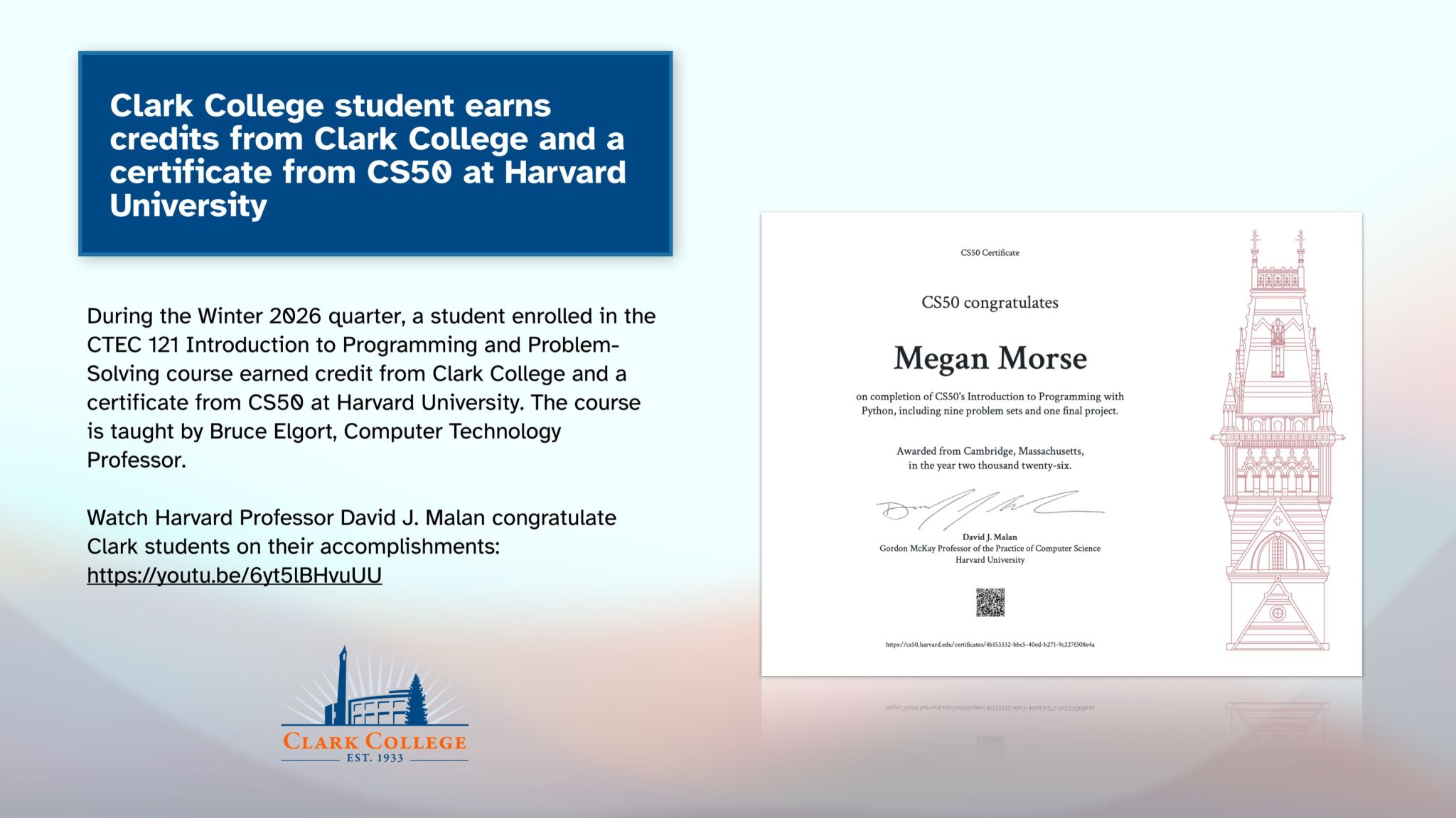
A few weeks ago, I wrapped up the 2025 CS50 Educator Conference and received a certificate from Harvard University (yes, that Harvard).

Big thanks to David J. Malan, Kelly Ding, and all the incredible educators from around the world who showed up ready to share, question, and reimagine how we teach. The conversations were honest, the ideas were fresh, and yes, I took a lot of notes in Obsidian.

I’m already planning some updates to my CTEC 121 class at Clark College (based on CS50P), thanks to what I learned. Lifelong learning isn’t a slogan, it’s a commitment. A mindset. A refusal to phone it in.

And hey, if you don’t post the certificate photo, did it really happen?

From Syntax to Strategy: Rethinking Coding Education in the Age of AI

Remember the big mission to teach every kid to code? We built the boot camps, launched the clubs, handed out laptops, and instilled hope. “Coding is the new literacy,” they said.

Fast-forward. Now, kids type a sentence into an AI, and boom, they have a fully functional app. No clue what a loop is. No idea why it works. But it runs. It passes. It’s done.

And I know. Debugging still matters. Reading the code still matters. Talking it out with the rubber duck still works wonders. That duck has been my co-teacher for years. Add some pizza to the mix and we’re cooking with logic.

But here’s the twist: AI is learning to be the duck. It’s patient. It listens. It suggests. It never gets pizza sauce on the keyboard. And it doesn’t care if the student skipped class.

So now I’m asking:

What does it mean to “learn to code” today?

Is it about the code itself, or the thinking behind it?

Are we still teaching kids how to build, or are we teaching them how to talk to the thing that builds?

If you teach, code, parent, or care about this space, talk to me. The duck and I are listening. We’ve got questions. And snacks, of course.

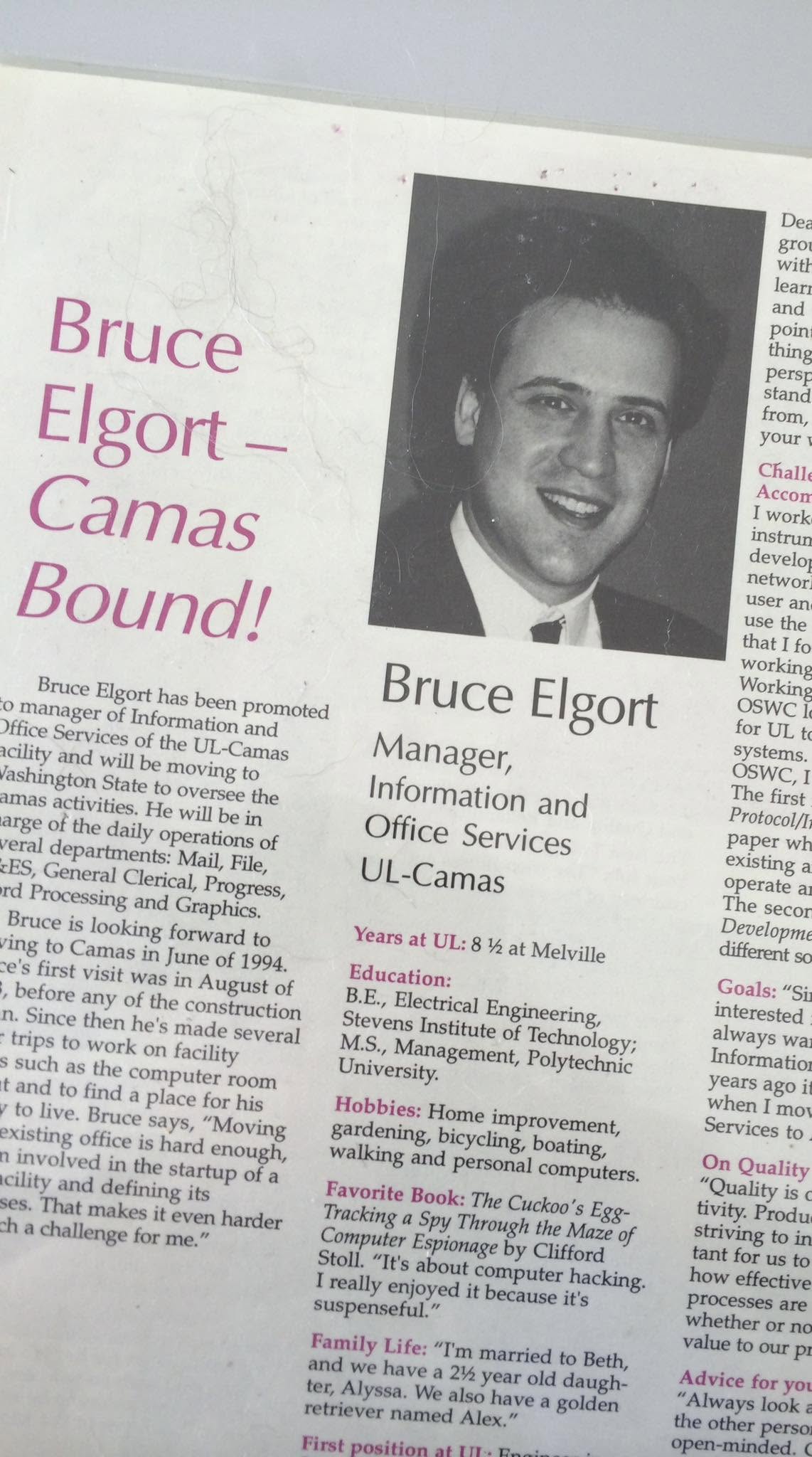
From Long Island to Camas: 31 Years of Gratitude

In 1994, I left Melville, Long Island, New York, and moved across the country to Camas, Washington. I did this to help open Underwriters Laboratories’ (UL) sprawling new office near Lacmas Lake. We were asked to create a new way for UL to do business, emphasizing technology and the reduction of paper.

It was a leap. New job. New coast. New everything. But it was one of the best decisions I ever made.

That move gave me a career full of purpose and challenges. But more than that, it led me to Gayle. This July, we’ll be celebrating our 19th wedding anniversary. That alone makes the move worth it a hundred times over.

Here’s to 31 years in Washington State and to the people and moments that have made it all unforgettable.

End of year thoughts 2025.1: Why My Students Matter More Than the Soundbites

Every quarter, I watch something quietly powerful happen in my classrooms.

Students show up. Some are juggling multiple jobs, others are raising kids on their own, a few have health issues or disabilities, and many are just trying to keep it all together.

And you know what helps keep them moving forward? Government assistance.

Yep. That thing people love to yell about on talk radio and the media.

Food benefits, housing support, childcare subsidies, grants, and even access to healthcare, without that scaffolding, many of these students wouldn’t make it through the first week, let alone finish a degree, land a job, or change the trajectory of their lives.

Is there waste in the system? Sure, there’s waste in every system. But I see the human side of it. I see students using that support not to coast but to climb.

We must stop pretending that “getting help” is the same as “not trying.” Because I’ve got a front-row seat to the trying. And it’s gritty, exhausting, and often heroic.

If we’re serious about opportunity, we must ensure the ladder stays in place. Otherwise, we’ll blame people for falling while we kick the rungs out.

When the World Is Changing Fast, College Moves Slow

More from Bruce’s Higher Education files:

In many industries today, change is constant. New tools emerge, new skills are needed, and job roles are redefined.

But in colleges? We form a committee. We write a proposal. We revise it. Then we wait.

And wait.

It can take years to create a new degree program. Not just a course, but an entire program.

Part of the delay is internal, but a big part comes from state-level approvals and accreditation bodies that move slowly. Their standards matter, but their processes were built for a different era.

Meanwhile, the world keeps moving. Cybersecurity threats evolve daily, and new surgical technologies are introduced regularly. Digital media, health care, skilled trades, AI, sustainability—none of these fields stand still.

The industry may have changed direction when a new program is approved, staffed, and launched.

This is not just an education issue. It is a workforce issue. Students end up with outdated skills. Employers struggle to find job-ready applicants. And the public wonders why college still feels out of sync with real life.

The job market is tough right now. Even highly motivated graduates are struggling to land junior roles. Companies want experience, so colleges must provide relevant, current, and adaptable training.

Career-connected learning is more important than ever. Real-world experiences, industry-informed curriculum, and partnerships that help students apply what they learn are no longer optional but essential.

We have done good work. Guided Pathways was created to help students stay on track, complete their programs, and move into meaningful careers. It was a step in the right direction. However, even that model is under pressure when we cannot build and adapt programs quickly enough to meet changing demands.

We need a new model: flexible, modular programs that can evolve with the world. These programs let us pivot based on what is happening in the workforce, our communities, and the global economy.

I will be honest. I do not have a solution. This is going to be hard. Most of us at community colleges run small programs. When you try to offer more options, enrollment gets spread too thin. Some classes fill up, and others may get canceled.

But the bigger issue is this. We are trying to prepare students for a fast-changing world using systems not built for speed (cue the Stray Cats).

If we do not start talking about this seriously, we will continue to send students into a world we did not equip them for.

#HigherEd #CommunityCollege #CareerConnectedLearning #WorkforceDevelopment #EducationReform #GuidedPathways #FutureOfWork