Tenure Made Me a Worse Professor (But I’m Taking It Back)

Today, May 24, marks my second anniversary of tenure. And I’ve got a confession. Tenure made me a worse professor.

Not worse in the “I don’t care anymore” sense. I still show up. I still teach my heart out. I still hand out pizza and rubber ducks, as if they were course materials. But something shifted during that long, grueling tenure process and hasn’t entirely returned.

The tenure process trains you to be careful. You learn to document everything, justify everything, and reflect on everything until your teaching feels more like a performance than a practice. You stop experimenting because experiments might not look great on paper. You stop taking risks because risks don’t always make for clean committee reports.

And if you’re not careful, you start teaching like someone is always watching. Because for a while, someone is.

That’s what happened to me. I slowly backed away from the version of myself who took bold swings and tried weird ideas. I started playing it safe, saying no to chaos and yes to control. I polished everything, trimmed the messy parts, and stopped leaning into the stuff that made my teaching mine.

But here’s the thing. I’m two years in now. I’ve got the stability. The security. The keys to the castle.

And I’m done playing small.

I want the pre-tenure Bruce back, who did things that made students laugh, think, and engage. The one who brought music into lessons. The one who asked, “What if?” instead of “Will this fit in my tenure binder?” The one who knew learning is supposed to be messy, unpredictable, and sometimes a little loud.

If tenure turned down your volume, I hear you. If it made you cautious, you’re not alone. But now that we’re here, we can choose how we show up again.

I’m choosing to take it back, one student, one duck, one slightly chaotic lesson at a time.

Let’s go.

Student Support Takes Time (And No, There’s Still No Pizza)

You wouldn’t walk into a restaurant 2 minutes before closing and expect a full-course meal, right?

So, why do some students show up for office hours two minutes before they end and expect a deep-dive code review, academic therapy session, and life coaching?

I get it. Life is busy, and sometimes the timing doesn’t work out. But just like a good meal (or a good slice of pizza), meaningful help takes time to prepare and serve.

If you need help, feel free to come in earlier. I’m literally doing this on the weekends, too. We can troubleshoot, brainstorm, or even debug your existential crisis. Rubber ducks and pizza references are optional. Office hours aren’t just for emergencies. They’re your reservation for success.

However, I want you to know that I will help you regardless of whether it’s late or last-minute. I’ve got your back.

And if my posted student hours don’t work for you, just let me know. We’ll find a time that does.

My Winter 2025 Teaching Schedule at Clark College

Here are my courses and teaching schedule for the Winter 2025 quarter at Clark College. If you have any questions about these courses, please get in touch with me.

CTEC 127 – PHP with SQL 1 (Monday and Wednesday)

This class will have mandatory attendance at Clark College Room SHL 124 from 10:30 AM to 12:50 PM on Mondays and Wednesdays.

The following days meet, in person and have mandatory attendance:

  • Monday, January 6th (Week 1)
  • Wednesday, January 22nd (Week 3)
  • Wednesday, February 5th (Week 5)
  • Wednesday, February 19th (Week 7)
  • Wednesday, March 5th (Week 9)
  • Monday, March 15th (Finals Week)
  • All other scheduled class meetings will take place via remote learning on Zoom.

CTEC 270 – Web Interface Design 1 (Monday and Wednesday)

This class will have mandatory attendance at Clark College, Room SHL 124, from 3:00 to 4:50 PM on Mondays and Wednesdays.

The following days, meet in person and have mandatory attendance:

  • Monday, January 6th (Week 1)
  • Wednesday, January 22nd (Week 3)
  • Wednesday, February 5th (Week 5)
  • Wednesday, February 19th (Week 7)
  • Wednesday, March 5th (Week 9)
  • Monday, March 15th (Finals Week)
  • All other scheduled class meetings will take place via remote learning on Zoom.

CTEC 121 – Intro to Programming and Problem Solving (Tuesday and Thursday)

This class requires mandatory attendance at Clark College Room SHL 125 on Mondays and Wednesdays from 10:30 to 12:50 p.m.

The following days, meet in person and have mandatory attendance:

  • Tuesday, January 7th (Week 1)
  • Thursday, January 23rd (Week 3)
  • Thursday, February 6th (Week 5)
  • Thursday, February 13th (Week 6)
  • Thursday, February 27th (Week 8)
  • Thursday, March 13th (Week 10)
  • Tuesday, March 16th (Finals Week)
  • All other scheduled class meetings will take place via remote learning on Zoom.

CTEC 122 – HTML Fundamentals

This class if entirely online and never meets.

How Pizza and Rubber Ducks Bring Us Together in the Digital Classroom

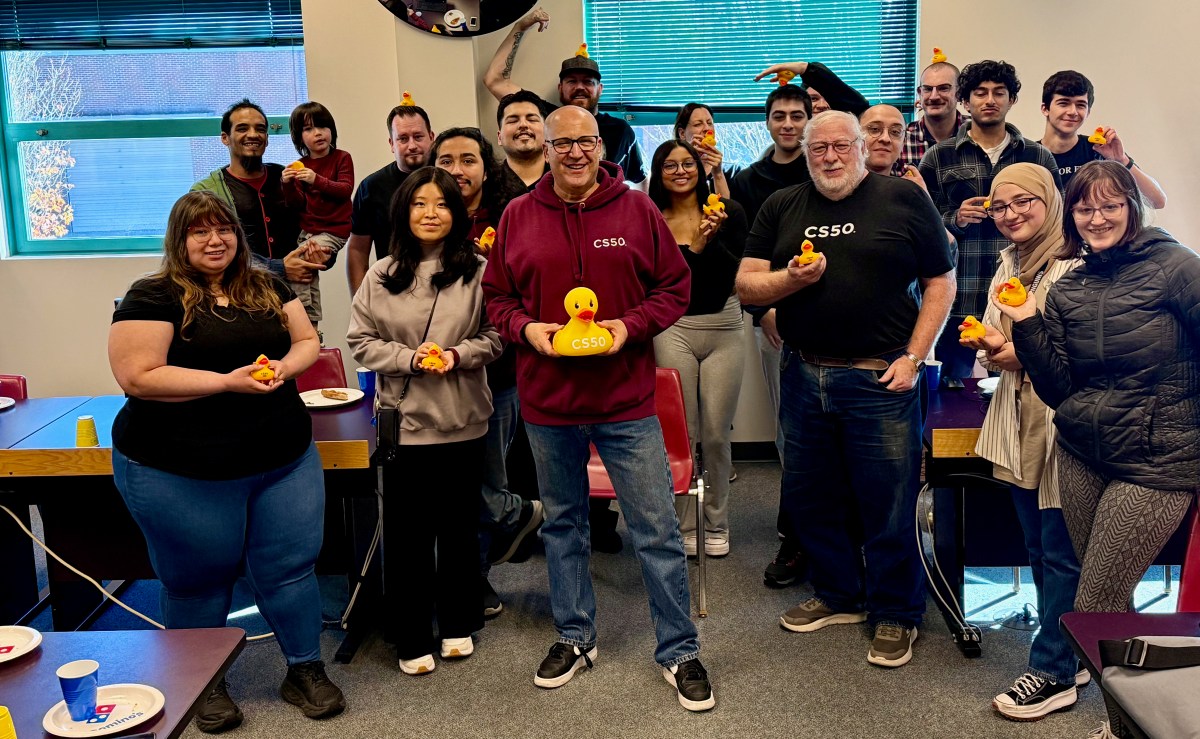
At Clark College in Vancouver, Washington, I recently brought a taste of community to our online and remote coding classes—through pizza and a little piece of the iconic CS50! This pizza party wasn’t just about food; it was a chance to unite students who usually connect only through screens. There’s something about sharing pizza that goes beyond filling our stomachs. It breaks down barriers, opens up conversations, and lets us see the human side of coding, a profession often steeped in virtual interactions and code blocks.

Pizza is almost a universal language, and even in a digital classroom, it creates a sense of camaraderie. From coding newcomers to seasoned tech enthusiasts, students gathered, laughed, and bonded over slices, sharing their coding challenges and side-hustles. Moments like these highlight the importance of community—reminding us that while we work individually, we’re part of a larger team learning and growing together.

And what’s a coding celebration without a twist? Each attendee walked away with a CS50 Rubber Duck. In case you’re wondering why a rubber duck, it’s not just a quirky gift—it’s a legendary problem-solving tool in coding circles! Rubber duck debugging encourages students to explain their code out loud, often helping them uncover solutions simply by verbalizing their thought processes. Now, every student has a little buddy to “talk” to while tackling their toughest challenges.

Katie Pierce Massey and Bruce Elgort

Whether solving bugs or sharing a laugh, we’re more connected, engaged, and inspired than ever. Here’s to pizza, ducks, and the strong coding community we’re building at Clark College!

Bruce Elgort and Dave Sims