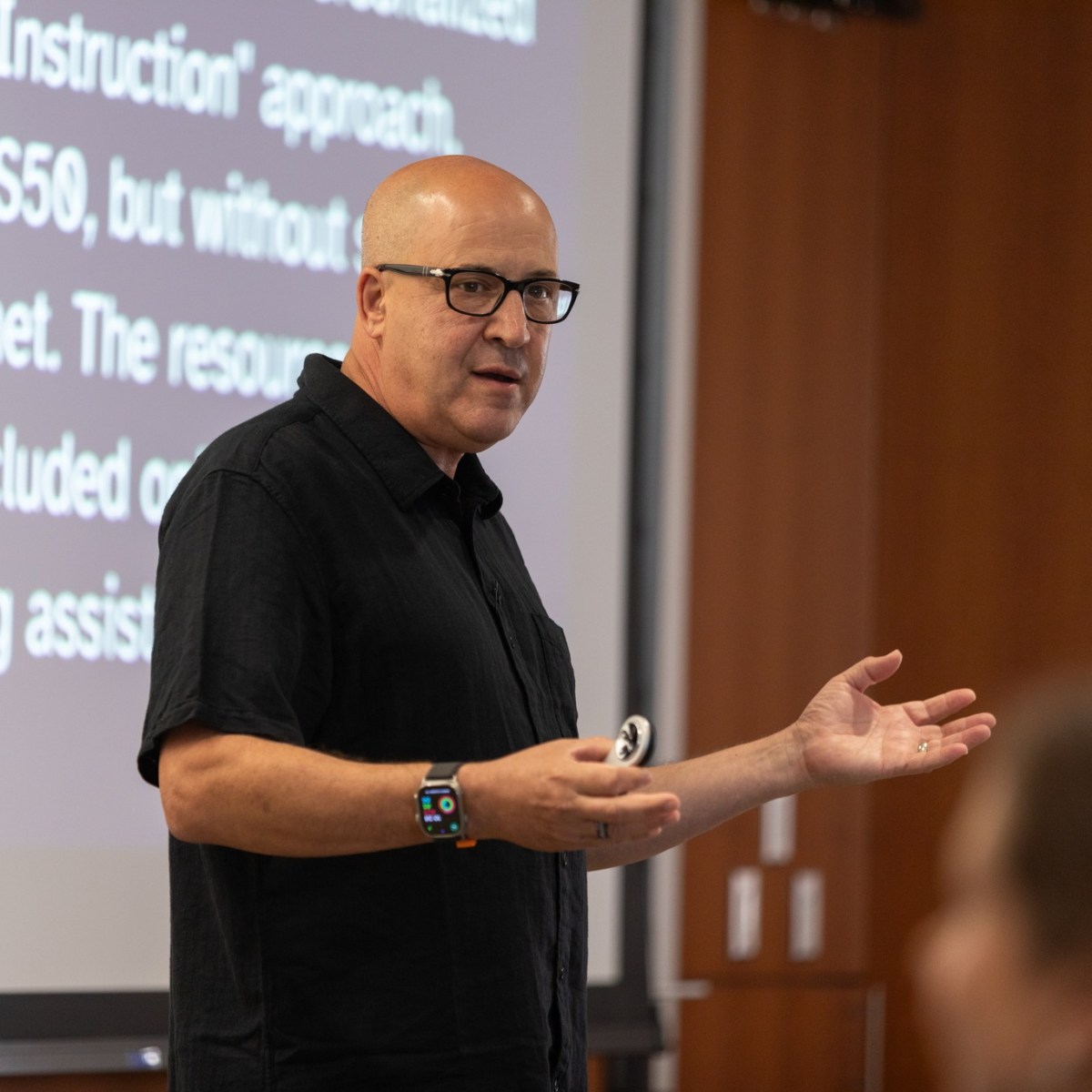
You’ll find this technology professor – an award-winning instructor at Clark College – working hard to inspire and challenge his students with meaningful web development and programming experiences. With a skinny vanilla latte (no foam) in hand, Bruce loves to tinker and test the boundaries of existing and emerging technologies, to then guide hungry minds through memorable, educational journeys to showcase with passion the ever-evolving innovations of society. An industry leader, Bruce is known for co-developing Elguji’s IdeaJam software, and is recognized by IBM as an ‘IBM Champion’ for being an innovative thought leader in cloud technologies.
Here are my courses and teaching schedule for the Winter 2025 quarter at Clark College. If you have any questions about these courses, please get in touch with me.
CTEC 127 – PHP with SQL 1 (Monday and Wednesday)
This class will have mandatory attendance at Clark College Room SHL 124 from 10:30 AM to 12:50 PM on Mondays and Wednesdays.
The following days meet, in person and have mandatory attendance:
Monday, January 6th (Week 1)
Wednesday, January 22nd (Week 3)
Wednesday, February 5th (Week 5)
Wednesday, February 19th (Week 7)
Wednesday, March 5th (Week 9)
Monday, March 15th (Finals Week)
All other scheduled class meetings will take place via remote learning on Zoom.
CTEC 270 – Web Interface Design 1 (Monday and Wednesday)
This class will have mandatory attendance at Clark College, Room SHL 124, from 3:00 to 4:50 PM on Mondays and Wednesdays.
The following days, meet in person and have mandatory attendance:
Monday, January 6th (Week 1)
Wednesday, January 22nd (Week 3)
Wednesday, February 5th (Week 5)
Wednesday, February 19th (Week 7)
Wednesday, March 5th (Week 9)
Monday, March 15th (Finals Week)
All other scheduled class meetings will take place via remote learning on Zoom.
CTEC 121 – Intro to Programming and Problem Solving (Tuesday and Thursday)
This class requires mandatory attendance at Clark College Room SHL 125 on Mondays and Wednesdays from 10:30 to 12:50 p.m.
The following days, meet in person and have mandatory attendance:
Tuesday, January 7th (Week 1)
Thursday, January 23rd (Week 3)
Thursday, February 6th (Week 5)
Thursday, February 13th (Week 6)
Thursday, February 27th (Week 8)
Thursday, March 13th (Week 10)
Tuesday, March 16th (Finals Week)
All other scheduled class meetings will take place via remote learning on Zoom.
At Clark College in Vancouver, Washington, I recently brought a taste of community to our online and remote coding classes—through pizza and a little piece of the iconic CS50! This pizza party wasn’t just about food; it was a chance to unite students who usually connect only through screens. There’s something about sharing pizza that goes beyond filling our stomachs. It breaks down barriers, opens up conversations, and lets us see the human side of coding, a profession often steeped in virtual interactions and code blocks.
Pizza is almost a universal language, and even in a digital classroom, it creates a sense of camaraderie. From coding newcomers to seasoned tech enthusiasts, students gathered, laughed, and bonded over slices, sharing their coding challenges and side-hustles. Moments like these highlight the importance of community—reminding us that while we work individually, we’re part of a larger team learning and growing together.
And what’s a coding celebration without a twist? Each attendee walked away with a CS50 Rubber Duck. In case you’re wondering why a rubber duck, it’s not just a quirky gift—it’s a legendary problem-solving tool in coding circles! Rubber duck debugging encourages students to explain their code out loud, often helping them uncover solutions simply by verbalizing their thought processes. Now, every student has a little buddy to “talk” to while tackling their toughest challenges.
Katie Pierce Massey and Bruce Elgort
Whether solving bugs or sharing a laugh, we’re more connected, engaged, and inspired than ever. Here’s to pizza, ducks, and the strong coding community we’re building at Clark College!
Explore practical strategies for integrating Harvard University’s CS50P Introduction to Programming with Python into community college settings with insights from Bruce Elgort, a legally blind Computer Technology Professor at Clark College in Vancouver, Washington, USA. Bruce, renowned for teaching accessibility and universal design, seamlessly transitioned from the industry to teaching Web Development at the college. He blends material from CS50P with TiLT (Transparency in Learning and Teaching) principles to help students along their guided pathways.
CS50 is Harvard University’s introduction to the intellectual enterprises of computer science and the art of programming, for majors and non-majors alike, freely available as OpenCourseWare.
Utilizing these approaches, Bruce has also taught CS50 at the graduate school level at Portland State University for students enrolled in Professional and Technical Writing. This 10-minute session, with 5 minutes dedicated to questions and answers, delves into tailored instructional methods and innovative curriculum designs inspired by the support model of CS50 at Harvard University.
Learn about the CS50 tooling that aids instructors in optimizing resources, monitoring student progress, and customizing courses to meet diverse student needs, ensuring they are well-equipped for success in today’s technology-driven society. Join Bruce to uncover a forward-thinking approach to teaching CS50 at Clark College and beyond.
During the Winter 2024 quarter, five Clark College students enrolled in CTEC 121 Intro to Programming and Problem Solving earned college credit and a certificate from CS50 at Harvard University.
Cs50 at Harvard University published a paper entitled “Teaching CS50 with AI: Leveraging Generative Artificial Intelligence in Computer Science Education“. As some of you know, I use CS50 tooling in my coding classes at Clark College, where students use the AI provided by CS50 in Visual Studio Code.